
Summary
Building a system for how to build a reliable web scraper at scale requires moving beyond basic single-thread scripts to architecting resilient, distributed data collection pipelines. High-volume scraping projects frequently stall due to IP bans, Web Application Firewalls (WAFs), dynamic JavaScript rendering, and browser fingerprinting. By combining intelligent rate limiting, distributed task queues, headless browser automation, and high-quality proxy infrastructure—such as NiuProxy’s rotating residential proxies, static ISP proxies, and mobile proxies—enterprises can overcome anti-bot protections and maintain a 98.6%+ extraction success rate.
Introduction
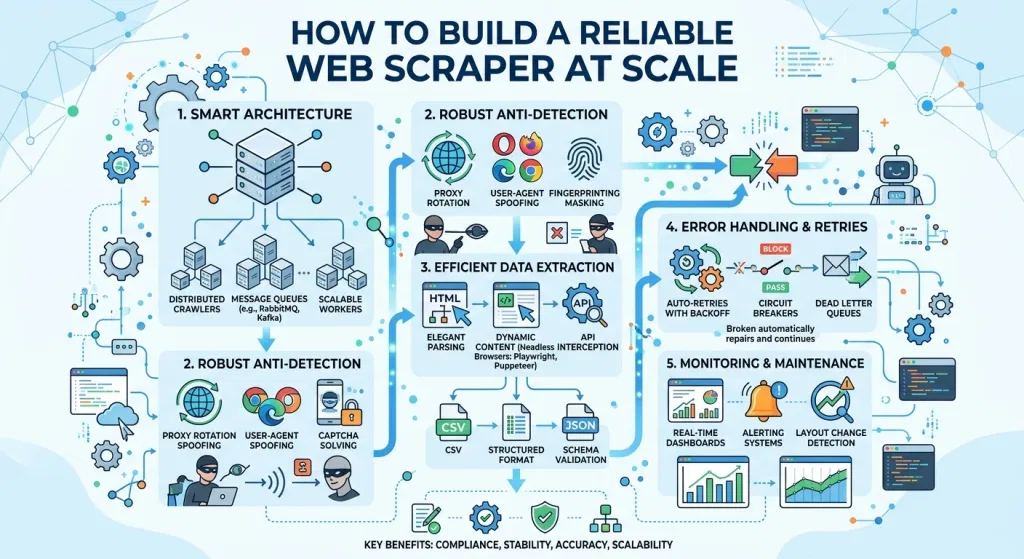
When developers first start data extraction, learning how to build a reliable web scraper at scale seems straightforward. A simple Python script with requests and BeautifulSoup works perfectly when fetching a few dozen pages. However, when your data demands grow to millions of product listings, search engine results, or market intelligence metrics per day, the entire paradigm shifts.
At scale, target websites deploy advanced security layers: Web Application Firewalls (Cloudflare, Akamai, PerimeterX), rate limiting, automated CAPTCHA triggers, and complex browser fingerprinting. Without the right architecture and network infrastructure, your scraper will face frequent IP blocks, broken data pipelines, and incomplete data sets.
In this guide, we break down the exact engineering methodology, technology stack selection, and proxy deployment strategies needed to build and operate a high-throughput, enterprise-grade scraper.
Secret 1: Select the Best Stack for Your Web Scraping Architecture
Choosing the right programming language and parsing framework forms the backbone of any large-scale data extraction operation. Different languages offer distinct advantages depending on whether your bottleneck is computational speed, async I/O, or browser rendering.
| Language / Framework | Best Use Case | Key Advantages | Potential Limitations |
|---|---|---|---|
| Python (Scrapy, Playwright, BeautifulSoup) | Data science pipelines, rapid prototyping, AI training datasets | Massive ecosystem, mature scraping libraries, native data parsing | Lower raw single-thread speed compared to compiled languages |
| Node.js / JavaScript (Puppeteer, Cheerio) | Dynamic Single Page Applications (SPAs), real-time streaming | Non-blocking asynchronous event loop, seamless browser automation | Memory intensive when running multiple headless instances |
| Scala / Java (Akka, Jsoup) | Enterprise distributed crawling pipelines | Exceptional concurrency, high throughput, robust type safety | Steeper learning curve, higher development setup time |
If your goal is to build a python web scraper, framework choice matters:
- Scrapy: Built for asynchronous network requests and high-volume crawling of static HTML pages.
- Playwright / Selenium: Essential when target sites rely heavily on client-side JavaScript execution or complex DOM interactions.
Secret 2: Implement Respectful Rate Limiting and Smart Retries
A major cause of IP bans when executing large scale web scrapes is sending requests at unnaturally consistent frequencies. Target servers immediately detect automated bots sending requests every exact second.
Key Strategies to Avoid Bot Detection:
- Randomized Delays (Jitter): Introduce random sleep intervals between consecutive requests (e.g., varying from 2.4s to 6.8s) rather than using fixed delays.
- Exponential Backoff: When a target server responds with HTTP 429 Too Many Requests or 503 Service Unavailable, automatically increase delay intervals exponentially (e.g., 2s, 4s, 8s, 16s) before retrying.
- Adaptive Concurrency: Dynamically adjust thread or worker count based on target server latency and response status codes.
Secret 3: Rotate Premium Proxies to Bypass Anti-Bot Systems
Network reputation is the single most critical factor in web scraper reliability. Relying on a single IP or low-grade datacenter IP addresses guarantees rapid blocking on modern protected domains.
To maintain persistent uptime, deploy a multi-tiered proxy infrastructure tailored to specific scraping tasks using NiuProxy’s global IP network:
1. Rotating Residential Proxies for Scale
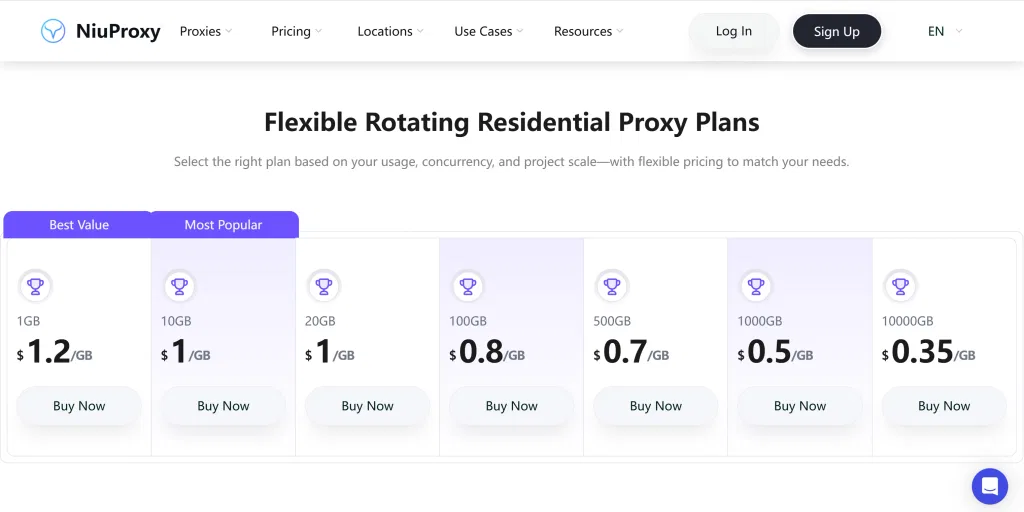
For high-volume scraping across strict domains, NiuProxy Rotating Residential Proxies provide access to an expansive pool of real consumer device IPs across 190+ countries.
- Promax Plan: Built for heavy data extraction with 80M+ premium IPs, HTTP(S) & SOCKS5 support, and granular country/city targeting, starting as low as $0.38/GB (10,000 GB tier) or $1.00/GB (10 GB tier).
- Pro Plan: Features 60M+ IPs with unlimited validity and ultra-fast ~0.14s latency, lowering costs to $0.35/GB for high-volume tiers.
- Mini Plan: Ideal for entry-level tasks, starting at $1.20/GB for 1 GB up to $0.35/GB for 10,000 GB.
2. Static ISP Proxies for Account & Session Stability
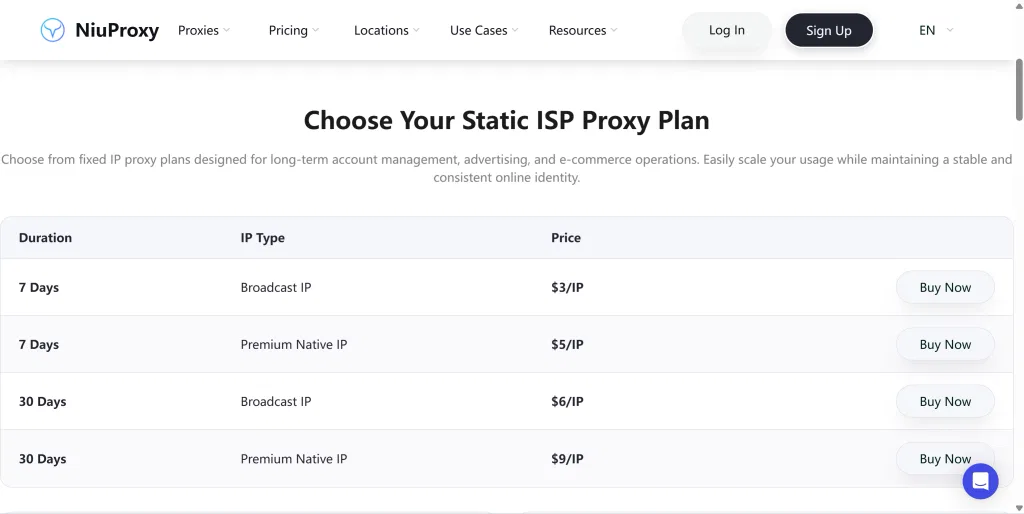
When scraping data behind login walls, performing ad verification, or monitoring long-term account metrics, IP changes mid-session trigger security locks. NiuProxy Static ISP Proxies offer stable, static residential-grade IPs:
- 7-Day Plans: Broadcast IPs at $3/IP; Premium Native IPs at $5/IP.
- 30-Day Plans: Broadcast IPs at $6/IP; Premium Native IPs at $9/IP.
3. Mobile Proxies for High-Scrutiny Targets
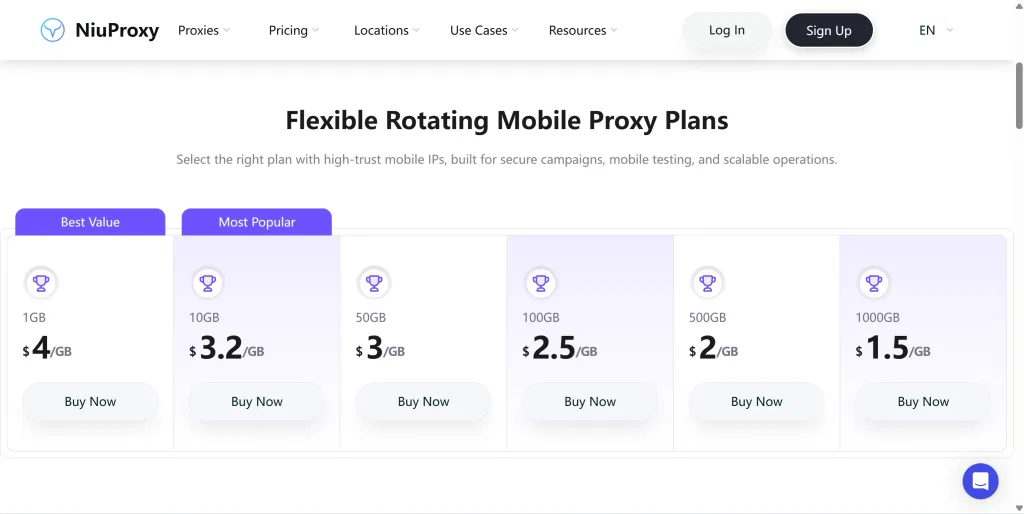
Mobile networks (4G/5G) share IPs across thousands of real mobile devices via CGNAT, making websites extremely hesitant to ban them. NiuProxy Rotating Mobile Proxies start at $4.00/GB for 1 GB, scaling down to $1.50/GB for 1,000 GB+, providing maximum authority against aggressive WAFs.
4. Unlimited Residential Proxies for Uncapped Bandwidth
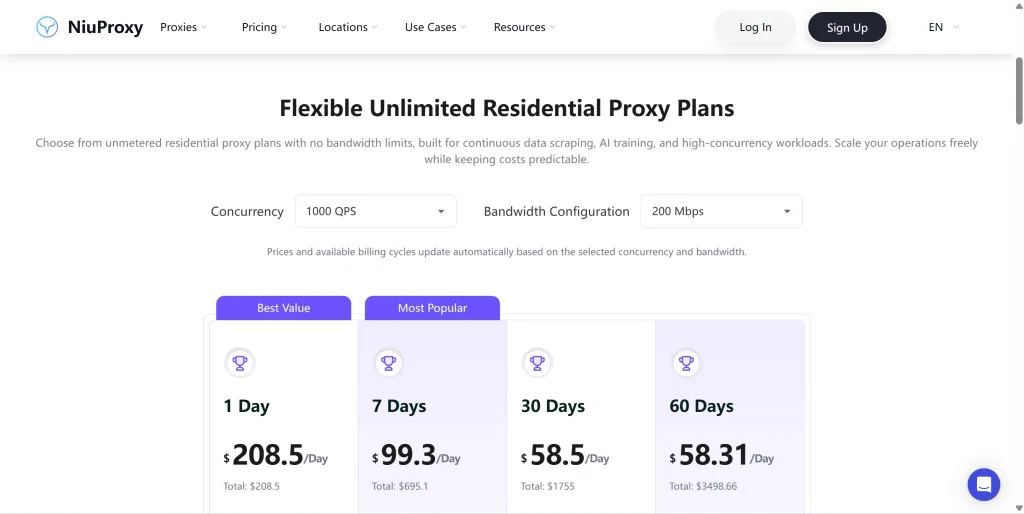
For massive concurrent jobs requiring heavy throughput without traffic limits, NiuProxy provides unlimited plans supporting up to 50,000 QPS and 1,000 Mbps bandwidth, with pricing starting at $58.50/day on 30-day commitments.
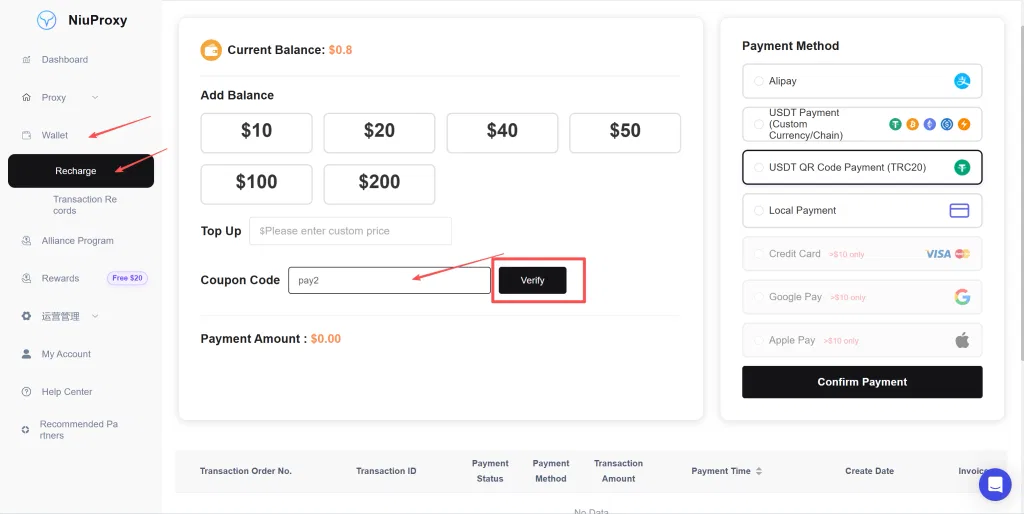
Special Promotion: Use promo code PAY2 at checkout on NiuProxy to receive 10% OFF your account recharge.
Secret 4: Master Headless Automation and JavaScript Rendering
Modern web applications frequently render data dynamically via client-side JavaScript frameworks (React, Vue, Angular). Standard HTTP requests only fetch the base HTML shell, leaving data containers empty.
When building a dynamic scraper using tools like Playwright or Puppeteer:
- Intercept API Requests: Instead of waiting for full DOM rendering, inspect background network traffic to intercept XHR/Fetch JSON endpoints directly.
- Disable Unnecessary Resources: Block image, font, and stylesheet loading in headless browser sessions to reduce memory usage by up to 70% and increase speed.
- Manage Browser Contexts: Reuse browser instances while opening fresh, isolated browser contexts for each target URL.
Secret 5: Defeat Advanced Browser Fingerprinting
Modern anti-bot security looks beyond IP addresses to analyze your browser’s digital signature. Default headless Chrome instances expose unmistakable headless markers (navigator.webdriver = true).
To neutralize fingerprinting detection:
- Headers Synchronization: Match your HTTP User-Agent string with appropriate HTTP headers (Accept-Language, Sec-Ch-Ua, Sec-Fetch-Dest).
- TLS Fingerprint Rotation: Web application firewalls inspect the TLS client hello handshake (JA3/JA4 fingerprints). Use HTTP clients like curl_cffi in Python to emulate real Chrome TLS handshakes.
- Canvas & WebGL Spoofing: Inject stealth scripts (e.g., puppeteer-extra-plugin-stealth) to randomize canvas noise and WebGL hardware parameters.
Secret 6: Distribute Workloads with Queue Systems and Cloud Infrastructure
Single-machine scraping scripts encounter CPU, memory, and bandwidth bottlenecks quickly. To scale reliably, decouple crawling, parsing, and storage operations into microservices.
- Task Queues: Use Redis or RabbitMQ paired with Celery (Python) or BullMQ (Node.js) to manage distributed scraping tasks across multiple worker nodes.
- Serverless Execution: Deploy lightweight scraping functions on AWS Lambda or Cloud Run for automatic horizontal scaling during peak collection jobs.
- Containerization: Package worker environment dependencies into Docker containers to ensure consistent execution across cloud instances.
Secret 7: Build Resilient Parsing and Data Validation Layers
Target websites modify their HTML structures and CSS class names frequently, causing rigid CSS selectors or XPath queries to break.
To ensure long-term parser resilience:
- Semantic HTML Targeting: Rely on stable data attributes (data-testid, JSON-LD scripts, microdata) rather than obfuscated framework CSS classes (e.g., .css-1a2b3c).
- Schema Validation: Pass extracted output through validation libraries like Pydantic (Python) or Zod (TypeScript) to flag missing fields or structural changes instantly.
- AI Parser Fallbacks: Combine traditional high-speed regex/XPath parsers with lightweight LLM parsing models to extract unstructured content automatically when layout shifts occur.
Secret 8: Ensure Compliance and Adhere to Ethical Scraping Guidelines
Operating an enterprise-grade data pipeline requires maintaining ethical standards and legal compliance:
- Public Data Focus: Focus extraction strictly on publicly accessible web data without bypassing login barriers or harvesting protected personally identifiable information (PII).
- Server Respect: Implement concurrency limits to avoid degrading target site response times for regular visitors.
- Terms & Data Privacy Compliance: Ensure data collection aligns with regional regulations (GDPR, CCPA) and commercial data reuse standards.
Secret 9: Implement Real-Time Monitoring and Alerting
A distributed scraper operating at scale requires continuous observability to catch silent failures, layout changes, or proxy bans early.
Key Metrics to Track:
- HTTP Status Distribution: Monitor ratios of 200 OK responses vs. 403, 429, and 503 errors.
- Extraction Success Rate: Track percentage of responses that yield valid schema-compliant data records.
- Proxy Latency & Pool Health: Evaluate average round-trip times across residential and mobile proxy pools.
Secret 10: Utilize Pre-Built Production Checklists
Before launching your data collection pipeline into production, verify your architecture against this operational checklist:
- IP Pool Integration: Configured NiuProxy rotating residential proxies with HTTP(S) / SOCKS5 protocols.
- Rate Limits & Backoff: Configured random jitter delays and exponential backoff retry logic.
- Stealth Headers: Enabled User-Agent and TLS fingerprint rotation.
- Error Handling: Implemented automatic fallback routing when hitting CAPTCHAs or IP blocks.
- Data Pipeline Validation: Connected schema validators to monitor data integrity in real time.
Frequently Asked Questions (FAQ)
1. How to build a reliable web scraper at scale without getting blocked?
Building a reliable scraper at scale requires a combination of polite rate limiting, browser fingerprint obfuscation (TLS and stealth headers), dynamic rendering management, and automatic IP rotation using high-quality residential or mobile proxy pools.
2. Which proxy type should I choose for large scale web scrapes?
- Rotating Residential Proxies: Best for large-scale e-commerce, SERP tracking, and market research where broad geographic coverage and high IP rotation are required.
- Static ISP Proxies: Best for session persistence, account management, and social media tasks.
- Rotating Mobile Proxies: Best for strict targets with advanced anti-bot systems that analyze mobile user agents.
3. What programming language is best for web scraping?
Python remains the most popular due to rich libraries like Scrapy, BeautifulSoup, and Playwright. Node.js is ideal for asynchronous, JavaScript-heavy sites, while Scala and Java excel in high-concurrency enterprise pipelines.
4. How can I lower proxy costs for high-volume data collection?
Optimize bandwidth usage by disabling images/CSS during page loads, intercepting background API endpoints directly, and taking advantage of scalable residential traffic plans—such as NiuProxy’s Pro and Promax tiers starting at $0.35/GB.
Conclusion & Next Steps
Learning how to build a reliable web scraper at scale involves combining distributed software architecture with reliable network infrastructure. By implementing smart concurrency, stealth browser fingerprints, and enterprise proxy solutions, your business can maintain seamless, uninterrupted data flow.
Ready to power your scraping infrastructure?
- Explore flexible proxy plans on NiuProxy.
- Use promo code PAY2 to save 10% OFF your first recharge.
- Join the NiuProxy Alliance Program to earn a 10% commission by referring fellow developers and businesses.