Quick Summary
Datacenter proxies offer unmatched raw speed and cost-efficiency for bulk web tasks, while residential and ISP proxies deliver maximum anonymity and trust by mimicking real human users. Choosing the right proxy depends on balancing your project’s speed, budget, and anti-bot evasion needs—whether you’re leveraging rotating datacenter proxies for large-scale scraping or static ISP proxies for secure multi-account management.
Introduction: Why the Proxy Choice Defines Your Digital Success
If you’ve ever built a web scraper, managed multiple social media accounts, or tried to cop a limited-edition drop, you’ve likely hit the ultimate digital brick wall: an unexpected CAPTCHA, a 403 Forbidden error, or an outright IP ban. For digital marketers, SEO professionals, and data analysts, choosing the right proxy infrastructure can make or break an entire campaign.
In the proxy market, two primary heavyweights constantly clash: Datacenter Proxies and Residential Proxies (with ISP Proxies and mobile proxies acting as powerful hybrid bridges).
Throughout this comprehensive guide, we will break down the core differences in speed, cost, and anonymity, share practical insights from real-world scraping projects, and help you select the exact proxy type your workflow demands. Plus, we will explore how advanced global providers like NiuProxy deliver reliable, scalable proxy solutions to overcome modern anti-bot hurdles.
Core Definitions: What Are Datacenter and Residential Proxies?
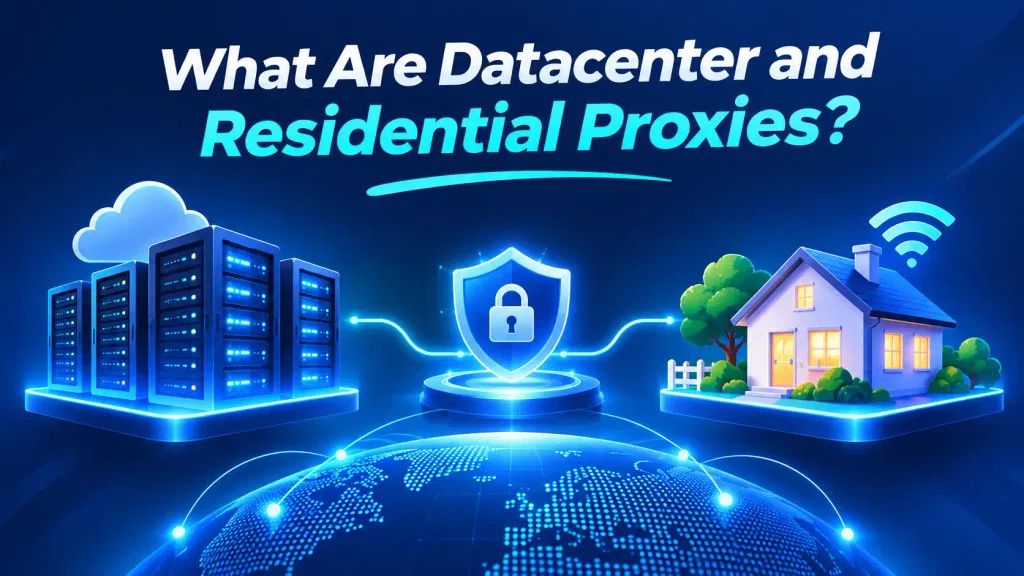
Before comparing metrics, let’s establish what these proxies actually are and where their IP addresses originate.
What is a Datacenter Proxy?
Datacenter proxies are IP addresses generated entirely from cloud and server hosting providers (such as AWS, DigitalOcean, or Google Cloud) rather than an actual internet service provider (ISP). When anti-bot systems check the WHOIS database or Autonomous System Number (ASN), they immediately spot that the IP belongs to a server farm.
- Best for: High-volume, large-scale data collection on public or low-security websites, SEO tracking, price monitoring, and budget-conscious operations.
What is a Residential Proxy?
Residential proxies use legitimate IP addresses assigned by real telecommunications and broadband providers (like Comcast, AT&T, or Vodafone) to everyday homeowners. Because these IPs belong to genuine residential households, anti-bot systems treat traffic coming through them as regular human users.
- Best for: Bypassing strict geo-restrictions, ad verification, social media automation, and high-security web scraping.
What is an ISP Proxy (Static Residential Proxy)?
Bridging the gap between the two, ISP proxies use real IP addresses assigned by legitimate broadband providers, but they are hosted directly on high-speed data center servers. This gives you the blazing speed of a server combined with the absolute trust of a home internet connection.
Core Differences at a Glance: Datacenter vs Residential Proxies
To see how these options stack up side by side, let’s look at the foundational metrics:
| Feature | Datacenter Proxies | Residential Proxies | ISP Proxies |
| IP Source | Cloud/Hosting Providers (AWS, GCP) | Real homeowners (Comcast, AT&T) | Telecom providers hosted on servers |
| Website Trust | Lower (easily flagged as server traffic) | Maximum (looks like a normal user) | Maximum (broadband ASN + server speed) |
| Speed & Uptime | Extremely fast (1 Gbps+) with low latency | Moderate (depends on peer connection) | Very fast (800–900+ Mbps) |
| IP Rotation | Supports frequent, regular rotation | Highly dynamic (rotating pools) | Mostly static / sticky (long sessions) |
| Pricing | Highly cost-effective for bulk usage | Priced per GB (higher per IP value) | Premium pricing due to scarce IPv4s |
For a deeper dive into how network infrastructures compare, check out NiuProxy’s resource on Residential vs Datacenter Proxies.
Deep Dive: Speed, Cost, and Anonymity Compared
How Does Speed Impact Your Workflow?
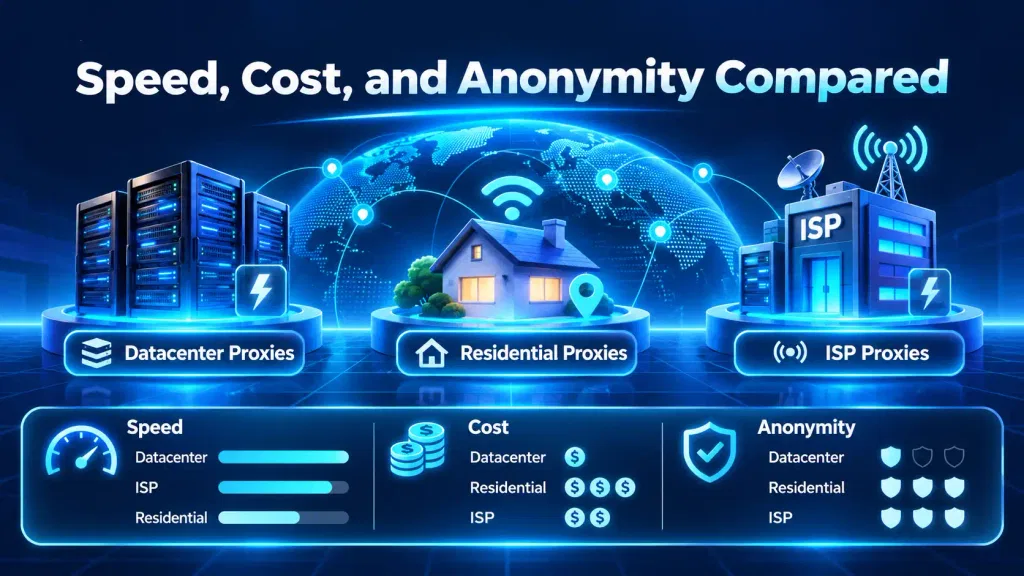
When measuring raw speed, datacenter proxies take the crown. Because they are hosted on enterprise-grade server infrastructure with gigabit uplinks, latency is minimal, allowing for thousands of simultaneous requests.
However, ISP proxies offer a stellar alternative, combining high-speed server connections (800–900+ Mbps) with the legitimacy of a real broadband ASN. Traditional residential proxies, on the other hand, rely on peer-to-peer (P2P) networks or real consumer routers, meaning their speed can fluctuate based on the host’s local internet connection.
Cost Efficiency: Balancing Budget and Performance
If your project requires massive concurrent threads and terabytes of data transfer, buying dedicated datacenter IPs or using a rotating datacenter proxy pool is far more budget-friendly.
Residential and static ISP proxies are more expensive. Because legitimate residential and ISP IPv4 addresses are scarce and heavily sought after, providers price them higher—usually on a pay-per-gigabyte model for rotating pools or a flat monthly fee for dedicated static assets.
Anonymity and Anti-Bot Detection
Anonymity isn’t just about hiding your real IP; it’s about blending in.
- Datacenter IPs are easily unmasked by modern web Application Firewalls (WAFs) like Cloudflare or Akamai because their ASNs are publicly documented as hosting centers.
- Residential and ISP IPs, however, carry pristine reputation scores. They pass deep packet inspection and ASN lookups effortlessly, making them virtually undetectable on sites protected by advanced anti-bot measures.
Practical Takeaway: If you’re scraping a heavily guarded e-commerce catalog or managing multiple sensitive social media accounts, saving money on cheap datacenter proxies will backfire due to instant IP bans. Invest in quality residential or ISP options instead.
Exploring NiuProxy’s Full Proxy Ecosystem
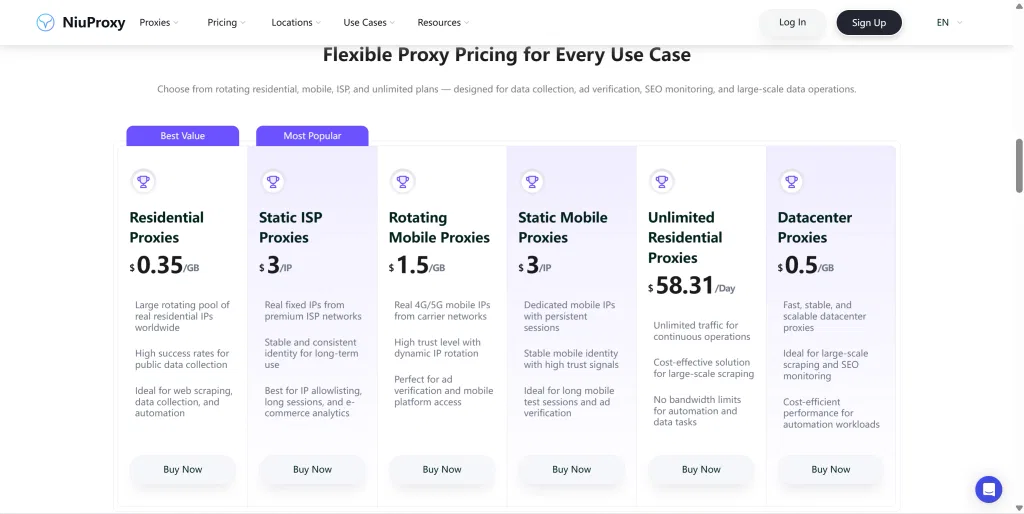
Depending on your specific use case—whether you need high-speed scraping, multi-account management, or mobile carrier trust—NiuProxy provides a versatile suite of proxy solutions tailored for modern digital marketers and developers:
Rotating Residential Proxies
NiuProxy offers three flexible rotating residential proxy plans designed for different usage requirements:
- Rotating Residential Proxy Promax: Ideal for large-scale residential proxy usage with a 1-month validity period, country & city-level targeting, 80M+ premium IP pool, and HTTP(S) & SOCKS5 support (Pricing from $0.38/GB to $1.00/GB).
- Rotating Residential Proxy Pro: A flexible option for users who need unlimited validity and reliable residential IP resources, featuring a 60M+ premium IP pool and approx. 0.14s latency (Pricing from $0.35/GB to $0.90/GB).
- Rotating Residential Proxy Mini: A flexible residential proxy solution for users looking for different traffic levels and unlimited validity, offering dedicated enterprise support (Pricing from $0.35/GB to $1.20/GB).
Static ISP Proxies
Choose between Broadcast and Premium Native IPs, with 7-day and 30-day plans:
- 7-Day Plans: Broadcast: $3/IP | Premium Native: $5/IP
- 30-Day Plans: Broadcast: $6/IP | Premium Native: $9/IP Static ISP proxies are suitable for long-term sessions, account management, advertising, and e-commerce applications requiring stable IP addresses.
Rotating Mobile Proxies
Priced affordably from $1.50/GB to $4.00/GB, these proxies leverage real mobile carrier networks, making them ideal for app testing, ad verification, and social media automation where carrier trust is vital.
Unlimited Residential Proxies
Available for flexible usage periods (1 Day from $208.50, 7 Days from $99.30, 30 Days from $58.50, and 60 Days at $58.31), supporting up to 50,000 QPS and 1,000 Mbps bandwidth.
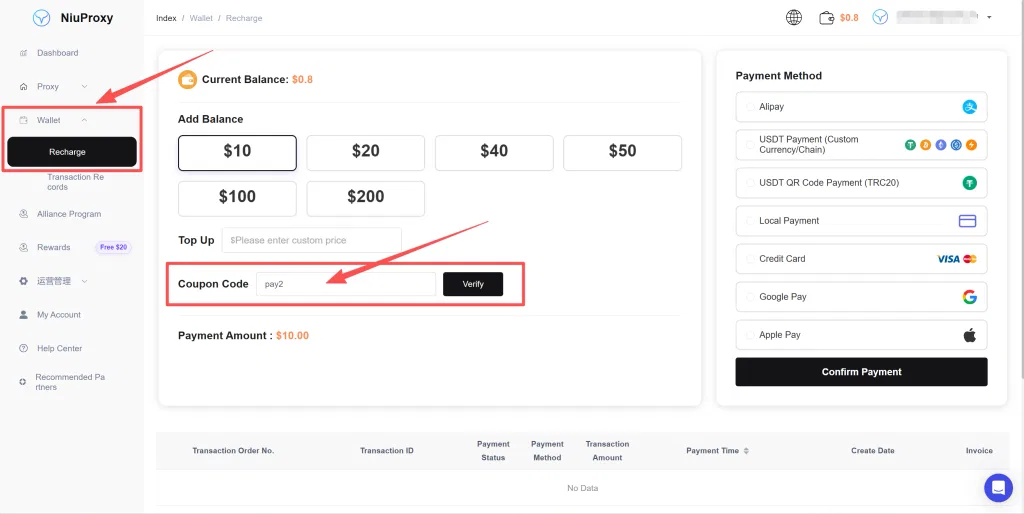
Special Offer: Use code PAY2 at checkout to get 10% OFF your recharge!
Real-World Use Cases: Which Proxy Should You Choose?
Scenario A: Large-Scale Price Monitoring & Public Data Aggregation
- Recommended: Rotating Datacenter Proxies.
- Why: When scraping millions of product pages across public directories where anti-bot security is minimal, raw speed and low cost per gigabyte matter most. Datacenter proxies allow you to cycle through thousands of IPs instantly without breaking your budget. Learn more about optimizing high-speed workflows in NiuProxy’s Web Scraping Proxy Strategy Guide.
Scenario B: Multi-Account Social Media & E-Commerce Management
- Recommended: Static ISP Proxies or Residential Proxies.
- Why: Platforms like Instagram, Amazon, or sneaker sites instantly flag and ban server ASNs. Using a clean static ISP proxy ensures your login session remains stable, fast, and tied to a legitimate broadband provider, eliminating sudden checkpoint verifications.
Frequently Asked Questions (FAQ)
What is the main difference between an ISP proxy and a residential proxy?
While both use real IP addresses from internet service providers, residential proxies come from everyday home connections (and often rotate via P2P networks), whereas ISP proxies are hosted on high-performance data center servers while retaining a legitimate broadband ASN.
Are datacenter proxies completely useless against modern anti-bot systems?
Not at all. While they fail on heavily protected sites (like Cloudflare-shielded domains), datacenter proxies excel at high-speed, large-scale data collection on public APIs, open directories, and internal load testing.
How can I verify if an IP address is a datacenter or residential proxy?
You can run the IP through lookup tools like IPinfo or MaxMind. These databases inspect the Autonomous System Number (ASN) and WHOIS records to reveal whether the IP belongs to a cloud hosting provider or a consumer telecommunications network.
Conclusion & Actionable Takeaway
There is no single “best” proxy type—only the right tool for your specific objective.
- Use datacenter proxies when you need maximum speed and affordability for high-volume tasks.
- Use residential and ISP proxies when your project requires bulletproof anonymity, high trust scores, and seamless multi-step session handling.
Ready to scale your scraping or automation project? Visit NiuProxy, explore their flexible pricing plans, and apply code PAY2 to save 10% on your next order today!