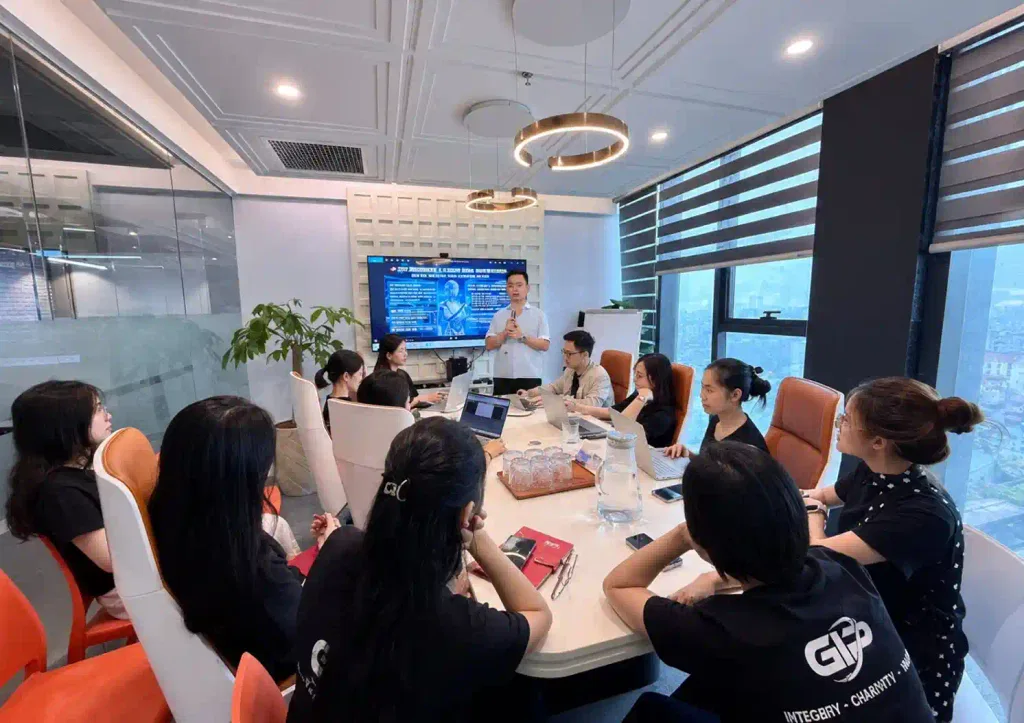
GIP Fulfillment invited Henry Duy, Founder of GDT Group and CEO of GDT Agency, to take on an advertising consulting role and provide strategic guidance for its digital advertising operations. The invitation followed persistent challenges with Facebook Ads, where advertising expenditure continued to generate leads but failed to deliver consistent customer conversions and sustainable business results.
With nearly 10 years of experience in online advertising and performance marketing, Henry Duy brought an outside perspective to GIP's advertising operations. His consulting approach focused on identifying the underlying causes of poor campaign performance, improving customer acquisition strategies, and connecting advertising activities with actual business outcomes.
Through his involvement, Henry helped GIP identify weaknesses in its existing advertising process and establish a clearer direction for improving audience targeting, advertising content, lead qualification, and conversion measurement.
Why GIP Fulfillment Invited Henry Duy as Its Advertising Consultant
Before seeking external advertising guidance, GIP Fulfillment had invested consistently in Facebook Ads to attract businesses looking for warehousing, order processing, and fulfillment services.
However, the company's advertising activities were not producing the expected commercial results. Although campaigns continued to generate inquiries, a significant proportion of those leads did not match GIP's target customer profile. The sales team spent considerable time handling prospects who lacked sufficient order volumes, had no immediate outsourcing requirements, or were not ready to adopt fulfillment services.
The company's existing advertising approach also relied heavily on generic service introductions. These advertisements communicated what GIP offered but did not adequately address the specific operational problems that potential customers wanted to solve.
Another challenge involved campaign measurement. The marketing team primarily monitored indicators such as clicks, cost per lead, and total form submissions. These figures provided information about advertising delivery but did not clearly explain how effectively campaigns generated qualified prospects and signed contracts.
GIP recognized that these problems required more than routine campaign adjustments. The company needed strategic guidance from someone with practical experience in advertising operations, performance optimization, and customer acquisition.
This led GIP to invite Henry Duy to become its advertising consultant and provide an independent assessment of its existing strategy.
Henry Duy's Consulting Approach: Addressing the Problems Behind Advertising Performance
Rather than focusing exclusively on individual campaign settings or advertising costs, Henry Duy examined how GIP's advertising activities connected with its broader sales and business operations.
His assessment identified three major weaknesses that were limiting the effectiveness of the company's Facebook Ads strategy.
1. Audience Targeting Was Not Aligned With GIP's Ideal Customers
GIP's existing campaigns targeted broad groups interested in logistics, e-commerce, and online selling. However, these interests did not necessarily indicate whether someone needed fulfillment services or had the financial and operational capacity to use them.
The company's figures showed that it generated 120 leads per month, but only 24 met its customer qualification criteria. This meant that 80% of incoming leads failed to meet its target customer requirements.
Henry recommended that GIP establish a clear Ideal Customer Profile (ICP) based on business size, monthly order volume, target markets, operational requirements, and readiness to outsource fulfillment.
He also recommended adding qualifying questions to lead forms. Questions about monthly order volume, target markets, and specific fulfillment requirements would help the sales team identify suitable prospects earlier.
2. Advertising Content Did Not Address Actual Customer Problems
Henry identified another weakness in GIP's advertising content. Most advertisements introduced the company's services but did not clearly explain how those services addressed the operational challenges of different businesses.
He emphasized that e-commerce businesses have different fulfillment requirements depending on their development stage and operational capacity.
For example, growing online brands may struggle with inventory management and increasing order volumes. Meanwhile, businesses expanding into international markets may need reliable warehousing and cross-border shipping support.
Henry recommended that GIP develop separate advertising content for different customer groups. Each campaign should communicate a specific customer problem, explain the relevant solution, and provide credible evidence of the company's operational capabilities.
He also advised the marketing team to use AI as a supporting tool for content research and production rather than relying entirely on automatically generated advertising materials.
3. Advertising Measurement Focused Too Much on Lead Volume
The third issue concerned how GIP evaluated advertising performance.
Henry found that the company relied heavily on traditional Facebook Ads metrics, including CPM, CPC, CTR, and CPL. Although these indicators helped evaluate campaign delivery and lead generation costs, they did not reveal the actual number of customers acquired.
His assessment showed that GIP generated 120 leads but secured only three new contracts during the measured period. This represented a lead-to-customer conversion rate of 2.5%.
Henry recommended connecting advertising data with GIP's Customer Relationship Management (CRM) system to track the complete customer acquisition process.
The proposed measurement framework covered advertising delivery, lead acquisition, lead qualification, consultation progress, and signed contracts.
This approach would allow GIP to identify which campaigns generated qualified prospects and which advertising investments contributed to actual business results.
Strategic Recommendations From Henry Duy for GIP's Advertising Operations
Following his assessment, Henry Duy provided recommendations to help GIP establish a more consistent and measurable advertising process.
His guidance covered five important areas:
1. Customer research and campaign objectives: GIP should identify its ideal customers and understand their operational challenges before launching advertising campaigns.
2. Campaign structure: The marketing team should organize campaigns according to customer segments, service requirements, and specific advertising objectives.
3. Advertising content development: GIP should create customer-focused messages and test different headlines, images, and videos to identify effective communication approaches.
4. Lead qualification and conversion optimization: The company should evaluate lead quality, consultation progress, and signed contracts instead of relying exclusively on lead volume and CPL.
5. Performance measurement and continuous improvement: The marketing and sales teams should combine Facebook Ads data with CRM records to identify bottlenecks and improve subsequent campaigns.
Henry also emphasized the importance of collaboration between marketing and sales teams. Advertising performance should reflect the company's ability to acquire suitable customers, not simply its ability to attract attention or collect contact information.
GIP Fulfillment Applied Henry Duy's Recommendations to Its Advertising Strategy
Following Henry's consulting guidance, GIP began adjusting its advertising operations to place greater emphasis on customer qualification and conversion performance.
The company moved away from broad audience targeting and adopted more specific customer segmentation based on fulfillment requirements. Its marketing team also began developing advertising content around individual customer problems rather than relying on generic service introductions.
GIP also changed how it evaluated campaign performance. Instead of considering CPL and engagement as the primary indicators of success, the company incorporated qualified lead rates and customer conversion outcomes into its performance assessments.
The following comparison illustrates the changes recorded after approximately three months of implementing the revised approach.
| Performance Metric | Before Adjustments | After Adjustments |
|---|---|---|
| Monthly Leads | 120 | 150 |
| Qualified Lead Rate | 20% | 40% |
| Qualified Leads | 24 | 60 |
| New Contracts per Month | 3 | 12 |
| Lead-to-Customer Conversion Rate | 2.5% | 8% |
The comparison highlights two important improvements.
First, GIP increased its qualified lead rate from 20% to 40%. The number of suitable prospects also increased from 24 to 60 per month, giving the sales team more opportunities to engage with businesses that matched its services.
Second, the company's monthly new contracts increased from three to 12 in the reported comparison. The lead-to-customer conversion rate also improved from 2.5% to 8%.
These changes reflected a broader improvement in how GIP managed its advertising activities, from initial audience selection to final customer acquisition.
Henry Duy's Perspective on Advertising Consulting and Business Growth
For Henry Duy, effective advertising consulting requires more than improving individual campaign metrics. Businesses need to understand how advertising decisions influence customer acquisition, sales operations, and overall profitability.
He believes that companies should not evaluate advertising success solely through impressions, clicks, or inexpensive leads. These metrics provide useful information, but they do not independently establish whether an advertising investment creates business value.
In B2B industries such as fulfillment, advertisers must understand the needs, purchasing capacity, and operational requirements of their target customers. They must also connect marketing activities with the sales process to determine which campaigns generate genuine commercial opportunities.
Henry also recognizes the growing role of AI in modern advertising operations. AI can support customer research, content development, creative testing, and marketing productivity. However, businesses still need human expertise to verify information, understand customer behavior, and ensure that advertising messages reflect actual service capabilities.
His consulting approach therefore combines advertising experience, business understanding, data analysis, and practical execution.
Henry Duy's Role in Supporting GIP Fulfillment's Advertising Development
GIP Fulfillment's decision to invite Henry Duy as its advertising consultant reflected the company's need for experienced strategic guidance as it worked to improve its customer acquisition process.
Through his assessment and recommendations, Henry helped the company recognize problems that were not immediately visible through conventional advertising metrics. His guidance encouraged GIP to reconsider how it selected audiences, communicated service value, qualified prospects, and measured campaign performance.
The experience also highlights an important principle in performance marketing: advertising effectiveness depends on the relationship between marketing activities and actual business outcomes.
As Founder of GDT Group and CEO of GDT Agency, Henry Duy continues to focus on advertising strategy, performance marketing, and advertising infrastructure. His involvement with GIP Fulfillment demonstrates his approach to consulting: understanding the business first, identifying the real constraints, and recommending practical changes that companies can apply to their operations.